

For nearly a decade, Gaten Matarazzo grew up in front of the world as Dustin Henderson—the sharp-witted, big-hearted kid with a lopsided smile who helped turn Stranger Things into a cultural phenomenon. Now 23, with the series finale finally streaming on Netflix, the reality of goodbye has begun to settle in. Slowly. Honestly. Inevitably.
Filming wrapped in December 2024, but the end didn’t truly arrive until much later. The staggered release, the long press tour, and the final reunions kept the farewell at arm’s length. “I kept giving myself excuses,” Gaten admits. It’s not over yet. There’s still press. There’s still Part Two. But once the finale aired, there was nothing left to postpone. “You kind of dust off your hands and say, ‘The work here is done.’ And then you let it sit with you.”
That sitting—with the memories, the grief, the gratitude—has been softened by something unexpected: closeness. The cast, who once scattered between seasons, found themselves more connected than ever. Daily messages. Constant check-ins. A shared understanding that this was not just the end of a show, but the end of a chapter that shaped their lives. “That’s been the biggest takeaway,” Gaten says. “How much closer we’ve all gotten by saying goodbye.”
The timing helped. The holidays brought family, old friends, and people from earlier versions of his life back into the frame—teachers who helped juggle school during filming, familiar faces resurfacing to say congratulations. It felt like a reunion with his own past, mirroring the show’s closing loop. “It’s been a lot of blasts from the past,” he reflects. “And it’s been really nice.”
Emotionally, the final season demanded more from Dustin than ever before. The buoyant optimism fans loved was replaced with anger, grief, and a sharp edge that was often uncomfortable to watch. Gaten knew things would change after season four, but not to this degree. Still, he felt honored to be trusted with Dustin’s darker turn. “He’s just… angry,” he says. “And he doesn’t want to be.”
Playing that version of Dustin came with its own mourning. Gaten missed the ease, the humor, the riffing with his friends. Sometimes, during table reads filled with laughter, he had to step away—to sit with isolation so it could show up on screen. Dustin’s journey, he realized, wasn’t about suppressing pain, but learning that pain doesn’t absolve you of choice. “That’s the journey of the show,” Gaten explains. You’re hurting—but you still decide who you are.
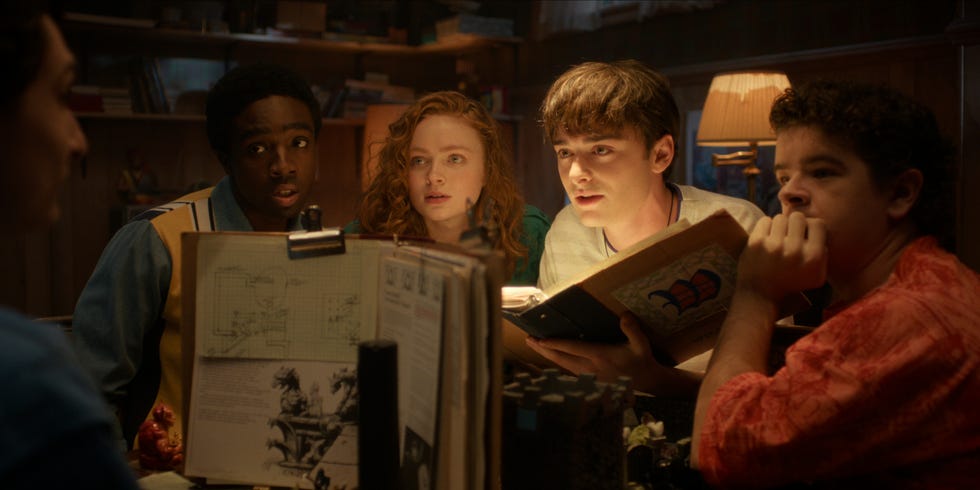
In many ways, Dustin also became the audience’s guide through the chaos. The one piecing together the rules of the Upside Down, translating fear into logic. The pressure of that responsibility was real. “If I don’t know what I’m talking about, no one’s gonna know,” Gaten laughs. But it was Dustin’s enthusiasm that made it work—the genuine thrill of discovery. Even in the face of death and loss, there was joy in understanding the impossible. As Mr. Clarke once said, science isn’t very forgiving—but to Dustin, it was still thrilling.
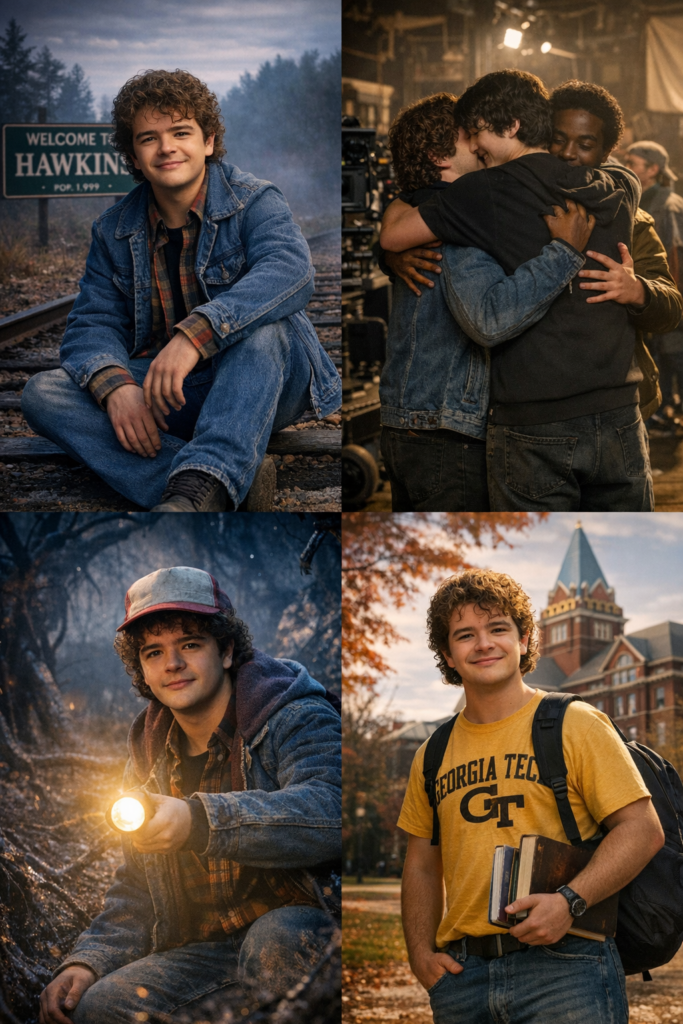
The finale offers glimpses of the future without spelling everything out. Dustin in college. Life moving forward. Behind the scenes, the writers shared quiet conversations with Gaten about where Dustin might land. Georgia Tech felt right—an engineering powerhouse in the late ’80s, and coincidentally just minutes from where the show was filmed. The campus scenes were shot near Gaten’s first Atlanta home, a neighborhood he hadn’t visited in a decade. Fate, it seemed, had a sense of humor.
That full-circle moment wasn’t accidental. Matt and Ross Duffer leaned into the meta—allowing the show, the characters, and the actors to say goodbye together. “We’re saying goodbye to the people who watched,” Gaten says. “Without them, there is no show.” The ending wasn’t about spectacle, but about heart. Family. Returning to where it all began.
Looking back, Stranger Things wasn’t just a career-making role—it was an education. Drama, comedy, stunts, effects, theater, discipline. “The best film school you can ask for is a set,” Gaten says. “The best acting school is consistent work.” He knows how rare that gift is, especially at such a young age. Talent matters, but luck plays its part too—and he never forgets that.
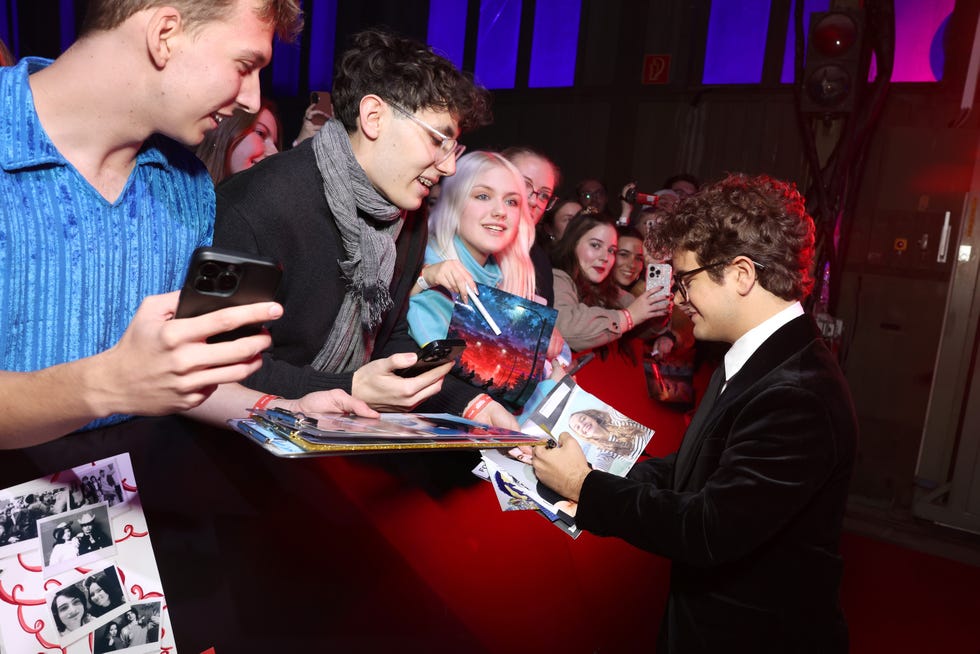
That awareness shapes the advice he gives young actors now: do it for fun as long as you can. Gaten was nine when he signed his first contracts—too young to grasp the weight of a lifelong career. He’s grateful he grew into someone who still loves the work. And he’s just as supportive of those who don’t. “There shouldn’t be a stigma,” he says. Choosing a different path isn’t failure—it’s self-discovery.
As he steps forward, new projects await: a Hulu comedy, voice work in Andy Serkis’s Animal Farm, and the possibility of returning to theater—though singing still terrifies him. He dreams of something original. Something strange. Something not built for easy success.
But when asked what he’s truly taking with him from Stranger Things, the answer is simple.
“The people,” Gaten says. “The family we made. They’re my best friends—and they always will be.”
In the end, that’s where the story lands. Not in Hawkins. Not in the Upside Down. But with the people who walked the journey together—and the quiet understanding that some goodbyes don’t close doors. They bring you home.